Showing posts with label music. Show all posts

Monday, June 21, 2010

Music Review: Deth Red Sabaoth by Danzig

Deth Red Sabaoth is Danzig’s first original album in six years, but it’s not like Glenn Danzig hasn’t kept himself busy in the interim. Since the release of Circle of Snakes, he’s put out the instrumental Black Aria II album, as well as a double-disc of outtakes called The Lost Tracks of Danzig. So it’s not like he’s been sitting on the sidelines.

I think the time away from traditional songwriting has done him some good, though. Since the band’s original line-up dissolved back in 1995, Danzig fans have had a rocky road. These albums aren’t as woeful as long-time fans would have you believe (I, Luciferi is a much better album than the band’s debut effort, in my opinion) but they are incredibly inconsistent.

Deth Red Sabaoth has been bandied about as a “return to form” for Danzig, which isn’t exactly true. Sure, these are the cleanest, strongest vocals he’s recorded since Lucifuge – and the blues influences certainly recall the band’s American Recordings days – but there’s a level of arrangement on Deth Red Sabaoth that I’ve never seen on Danzig’s previous recordings. While Rubin set the template for the band with limited, dry arrangements, Glenn and guitarist Tommy Victor layer dueling guitars on the new album in a way that would make Soundgarden weep. This is a lush recording and couldn't be further removed from Rubin's AC/DC sound fetish.

And while the performances here stand out, Glenn seems to be showing a renewed interest in song writing. The two-part Pyre of Souls might be one of the best things he’s ever written and is almost orchestral in its arrangement, while Ju Ju Bone manages to be both badass and hilarious.


It might help that Glenn’s exploring some of his favorite subject matter: rebellion, femme fatales, life, death and freedom. One of Circle of Snakes' various shortcomings were the lyrics, which seemed to be pulled at random from the AD&D Fiend Folio. Those kinds or lyrics are at a minimum on Deth Red Sabaoth, which shows Danzig at his most creepy and sarcastic (such as the song The Revengeful.)
If I’ve got any real complaint with the album it’s that it didn’t go far enough in some of its concepts. On a Wicked Night might have been better served had it stayed the course as an atmospheric acoustic track rather than exploding into the usual power-rock ballad ending. And Black Candy is a cool little song, even if Glenn’s already covered this ground with Black Dream, Her Black Wings, She Rides, Lady Lucifera, etc.

If you like Danzig, you’ve really got no reason not to give this album a spin. There’s no guarantee it’s going to win you over, but if it doesn’t it won’t be from a lack of trying.

Music Review: Something for Everybody

The lead-up to Devo’s first new album since 1990 was a lot more fun than the album, itself. Which isn’t really surprising. It’s rare for any artist to return to early triumphs and bring with them anything more than disappointment for their fans (The Godfather Part III, The Dark Knight Strikes Again, the last Indiana Jones movie, etc.)

That being said, I enjoyed Something for Everybody a lot more than I thought I would. I was one of those folks to take part in Devo, Inc.’s “song study,” a focus group formed to help Devo’s new corporate overlords determine the most consumer friendly version of the album. It was a lot of fun, even if the samples of the new songs left me a little underwhelmed. My favorite song on the original roster, What Us Work It, didn’t make the cut for the final CD.

Still, there’s a level of detail and craftsmanship on display on the album that’s impressive, even if some of the songs haven’t really stuck with me. There's an old-school '80s bounce to these tunes that never sounds like a nostalgic pose. Something for Everybody stays true to the band's original premise of social devolution, going so far to proclaim at the start of No Place Like Home that it's a "song of truth and beauty for you" with all the misguided sincerity of a machine.

My favorite track is Please Baby Please, which has a funky New Traditionalists kind of rhythm to it, not to mention the album's most searing guitar tracks. Human Rocket is also pretty cool and, while I dig the idea and execution of Don't Shoot (I'm a Man), I'm a little perplexed by the band's use of something as dated as "Don't Taze Me Bro" for the song's closing refrain.

Maybe my dissatisfaction is just lingering disappointment on my part: Devo has always been my patron saints of musical ethics, the rare example of a band smart enough to know when to quit. Too many bands stick around just long enough to make you resent them, but Devo got out with their legacy intact. I'm happy to see them back (and writing new music again that's NOT Dev 2.0) but worry that it's not going to end well.

That being said,  Something for Everybody is still a fun little diversion, even if it falls a little shy of the precedents set by albums like Freedom of Choice and Q&A. If nothing else, I'm delighted to see Devo getting a little love after all these years.


Friday, May 21, 2010

Melissa Auf Der Maur:
Out of Our Minds

Out of Our Minds is one of the most ambitious mainstream musical projects this side of The Flaming Lips . Not content to let the music stand alone, Melissa Auf Der Maur has apparently shot a film and created a comicbook to accompany the album. The details of the other two “inter disciplinary” projects are kind of sketchy — I don’t know what the comic is about, what the film depicts or how either relate to the album — but Auf Der Maur has had a grand time showing off her work to audiences at venues like the World Science Fiction Convention in Montreal.

I’m not convinced Out of Our Minds has a narrative concept, but it’s certainly veined by themes of life, love, death and how all three concepts are bound together. Its edge is also honed by romance, in the belief that there’s more to life than what we can feel and touch — but that sensual experiences are also our most direct connection to life.

There’s a primal feel to the album, but in many ways it’s a more restrained effort than her first solo effort. But it’s also a more accomplished album, one that doesn’t suffer from the shortcomings of her debut (which had lyrics that sometimes sounded like they were written by a high school drama club.)

The most notorious track on the album is, of course, her duet with Glenn Danzig, who has long vowed to never participate in anything even resembling a duet. Auf Der Maur convinced Danzig to participate by simply writing him a letter and asking him. With luck, this is a sign that Danzig is  getting comfortable with the idea that people like his work.


Melissa Auf Der Maur and Karen Elson perform Danzig’s song, Devil's Plaything.

"My lucky sweatband that I wore throughout most of Hole was a Danzig patch sweatband, and I used to live in Los Angeles not too far from Danzig's home and drive by in my 1967 Cougar and would whisper, 'Please be my friend,'” she told Noisecreep. "I wanted so bad to have Danzig in my life."

Lucky for us, their collaboration — Father’s Grave — was worth the wait. Auf Der Maur and Danzig share writing credit on the song, but it’s clear that she had most of the tune in place before Danzig signed on. It harkens back (thought not too obviously) to Danzig’s Lucifuge days and is a terrific song.

Out of Our Minds is a diverse offering: Auf Der Maur flirts a little with ‘70s style psychedelia, quieter instrumentation that sometimes puts her voice further in the front than ever before and lurching rhythms that have been her songwriting signature since her days with Hole.

But there’s more to the album than a momentary detour to rock history. The album opens with an instrumental titled The Hunt which pulses with a quirky heartbeat and ambient vocals. The entire album builds steam as it progresses, with the harder, faster songs reserved for the final act. Father’s Grave gives way to The Key and The One, two songs about destiny and love that might sound sentimental coming from another musician. The album ends with the Nirvana-esque 1000 Years and techno-tribal styles of Whispers and Potions, which comes close to bringing the album full circle with its opening track.

Even though many of these themes would be perfectly at home on a Dio album, Melissa Auf Der Maur’s writing style is distinctively feminine. She’s also a good enough writer to find a way approach these subjects in ways that won’t frighten the straights. It’s a seductive approach to communication that is often missing from rock and roll.

NOTE: According to a recent Facebook post, Melissa Auf Der Maur and Jack Forbes, the artist on the Out of Our Minds comic, will be appearing Tuesday, May 25 at Forbidden Planet in NYC. If any of you are attending and want to share photos, please let me know.

Tuesday, May 18, 2010

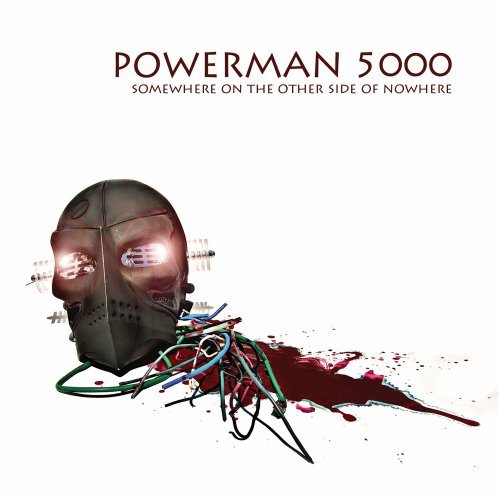
Powerman 5000: Somewhere on the Other Side of Nowhere (redux)

Somewhere on the Other Side of Nowhere has its feet planted akimbo, with one in metal and the other in pop. If you need a reminder that the rules for rock have changed in the 21st century look no further than the utter lack of shame in this dichotomy. And that’s a good thing, in case you were wondering.

Released last fall, it’s easy to peg the latest album from Powerman 5000 as a callback to its most commercially successful album, Tonight the Stars Revolt. But that shit would only be true if you’re one of those people who don’t pay much attention to the stuff going into your earholes. “Hey, it’s Powerman 5000 and they’ve got songs about space stuff! That makes it the same!”

While it’s true that the fantastic rears its ugly head in full force on Somewhere on the Other Side of Nowhere, it’s got little to do with any of PM5K’s previous albums beyond the fact that frontman Spider is one of those rare guys who can learn from both his successes and failures. Anyone familiar with the band’s entire catalog can see these strengths at play here, but if you’ve only heard Tonight the Stars Revolt … well, I feel a little sorry for you.

But that doesn’t mean I arrived at this album with an open mind. Some of my initial resistance to this album has had to do with a little cognitive dissonance on my own part. My gut response to the song V is for Vampire was based on my growing hatred of vampires. I think my taste for vampires ended with the demise of Buffy the Vampire Slayer and Angel, and the Twilight series has quickly turned distaste into outright nausea. I hear the word “vampire” these days and the first thing I think about are teenage goths shopping for spiky belts and black lipstick at Hot Topic.

While I’m still not wild about that particular song, I remembered A is for Apathy from the Transform album and wondered how long it will take for Spider to record a song for every letter in the alphabet. Not only would an alphabet-themed concept album be the height of geek chic, it would give PM5K an excuse to cover C is for Cookie — which would be amazing. And I’m not even joking a little bit.

What Spider’s got going for him is an understanding of both rock and science fiction history. Part of me wishes he’d pull from that bag of tricks a little more often and hit that ComicCon attitude with a lot more ferocity. But lyrically and musically it’s hard to argue with his aesthetic choices. The song Supervillain hits all the right beats without resorting to excessive namedropping (which is something that even mc chris has been pulling away from in recent years) while Do Your Thing plays like the kind of song the patrons of the "creature cantina" in Star Wars might listen to.

Show Me What You Got is a gut punch that suffers a little by its proximity to Supervillain. I like the latter so much that I’ve had a bad habit of skipping over the first few tracks just to get to it. I’ve also had a little trouble accessing Time Bomb because I’ve tended to step backward to the preceding title track a little too often.

What I didn’t immediately notice when first listening to the album was the level of electronica layered into the songs. PM5K has had one of the more fascinating identity crises in rock and roll during the last 15 years, so it’s easy to take their frequent changes in direction for granted (which is kind of a shitty thing to do to a band, but it happens.)

Bits of the electronic ambience is intentionally obtuse and, I suspect, intentionally calls back to failed experimental music of the 1970s. But Spider uses these kinds of effects as seasoning and doesn’t rely on them for more than a few seconds at a time. The spine of a vital rock band branches throughout every track on this album regardless of the weird territory it sometimes explores. You can even hear elements of Devo and Daft Punk creeping in around the edges but PM5K takes these elements to places those bands have never gone, for better or worse.

At a little over 30 minutes in length, Somewhere on the Other Side of Nowhere might appear to fall on the wrong side of the American Tradition (tm) of “bigger is better.” But I prefer a well-edited album to the kind of bloated messes produced by artists who confuse their own ambition for talent (Note to Billy Corgan: you’re a remarkable song writer, but not everything you record is a gem.) Very few albums need to be 72 minutes long or spill out over two discs.

In fact, some of the best rock albums ever recorded hit that 35-minute sweet spot and quit while they’re ahead: Funhouse by The Stooges; Tyranny and Mutation by Blue Oyster Cult; Machine Gun Etiquette by The Damned; pretty much everything recorded by The Minutemen. So when every track is strong, shorter is always better.

So don’t be an asshole. Go buy Somewhere on the Other Side of Nowhere right now.


 *

After that, keep up with Spider at his blog Rockets and Robots. He's currently soliciting ideas for cover songs for Powerman 5000. My suggestion: Magneto and Titanium Man by Paul McCartney.

Tuesday, May 11, 2010

Powerman 5000: Somewhere on the Other Side of Nowhere


I’ve seen Powerman 5000 three times in concert, but never on purpose.

The first time was back in 1997 in Greenville, S.C, when the band was opening for Danzig. I had no idea who they were but thought they had an interesting sound, interesting enough for me to later keep an eye peeled for their album. (It didn’t hurt when one of their guitarists gave me a PM5K bumper sticker during the Electric Hellfire Club’s set — a bumper sticker drawn by Rob Zombie, no less.)
I later saw the band again while shooting photos of Metallica’s Summer Sanitarium tour stop in Rockingham, N.C. (that’s one of my photos above) and again a few years later at a festival in Columbia, S.C.

So PM5K and I have a history. I kinda love the band.

The band went off the rails back in 2001 when frontman Spider shitcanned the album Anyone for Doomsday just a few weeks before its scheduled release. It was a major setback for the band and took them off the cultural radar for a time. They never really bounced back from it, but I have to admire the balls it took to trash an entire album just because it wasn’t up to snuff. (Note: I’ve heard Anyone for Doomsday and it actually has some great moments. It’s since been removed from the market because of legal issues, but bootleg downloads of it aren’t difficult to find.)


I’ve kept up with the band — which is now just Spider and a revolving cast of hired gunmen — over the years, but was surprised last week to see a new PM5K album was released in late 2009. I stumbled on Somewhere on the Other Side of Nowhere at Emusic, downloaded the single Supervillain, and quickly committed to buying the entire album.

I’m still trying to wrap my head around it, which is probably a polite way of saying it’s not everything it ought to be. There are some stand-out tracks present — the title track, Supervillain and Do Your Thing come immediately to mind — and I love the album’s infatuation with outsider characters. It makes a pretty interesting statement about individuality that even the album’s goofier moments can’t really undermine.

Spider spent much of the last decade trying to distance himself from the Sci-Fi/B-movie ferocity that defined the early part of his career, so I’m glad to see him embracing the ComicCon aesthetic again. If Somewhere on the Other Side of Nowhere is missing anything, it’s a production-level concept that ties the album together. But Spider can still write one hell of a chorus (which isn’t as easy as it might sound.) I’ve been fighting a losing battle with insomnia during the last few weeks and Supervillain did absolutely nothing to help. I was bouncing off the walls for hours after first hearing it.

Wednesday, March 10, 2010

Concept Albums: Imaginos

Released in 1988, Imaginos was the last album released by Blue Oyster Cult on CBS, the label that had been their home since their first release in 1972. But, despite the prominence of their name of the album cover, it's pretty easy to argue that Imaginos is a Blue Oyster Cult album in name only.

The story is fairly complicated and extremely plot heavy when compared to other narrative concept albums. Voodoo, European explorers, invisible gods and Lovecraftian fish cults linger at the fringes of a tale that surrounds "an actor in history," a man created by divine (or alien) forces to help shape the destiny of humanity. The punchline to his lifetime(s) of service is World War I, which begins after Imaginos captures a black mirror from a Mayan pyramid and brings it back to England where it slowly poison the dreams of Europe.

And, just in case you had no trouble following the story, the songs are all sequenced out of order to create a "random access myth." Any brain tumors you develop from trying to crack this story are your own problem.

That's the story presented on the album. The story behind the album is kind of unpleasant, too.

The members of Blue Oyster Cult are glorified guest stars on Imaginos. The basic tracks had been recorded by Albert Bouchard, BOC's original drummer (and primary songwriter,) for a possible solo album in the early '80s. Bouchard was kicked out of the band after the release of Fire of Unknown Origin in 1981 but continued to work on the solo project. When it became clear that CBS had no intention of releasing the album with Bouchard's vocals, they suggested he and Blue Oyster Cult reconcile and release the album together.

A few members of BOC recorded overdubs, mostly vocals on many (though not all) of the songs, as well as some new guitar tracks. Additional lead guitars were provided by a number of outside hands, including Robbie Kreiger of The Doors and Joe Satriani, who earned studio time to record Surfing with the Alien by cleaning up tracks for Imaginos. There were so many guitarists present on this album that they are credited under the banner of "The Guitar Orchestra of the State of Imaginos."

The new Bouchard/BOC partnership was brief. In the end Bouchard lost his solo album, Blue Oyster Cult ended their relationship with CBS and they all parted ways for good.

There's a great deal more to this story, some of which can be found on Wikipedia. There's more that might fall under the heading of "gossip" but those stories shouldn't be hard to find if you know which message boards to haunt.

Meanwhile, Albert Bouchard's Imaginos demos leaked onto the Internet a few years ago and they're worth checking out. Included are a few tracks that didn't make the final album, such as the marvelous (and Springsteen-esque) song The Girl That Love Made Blind. It's the closest thing you will ever hear to a Blue Oyster Cult Christmas song.

Track listing:
01 I Am the One You Warned Me Of
02 Imaginos
03 Gil Blanco County
04 Del Rio's Song
05 Blue Oyster Cult
06 Les Invisibles
07 The Girl That Love Made Blind
08 The Siege and Investiture of Baron Von Frankenstein's Castle at Weisseria
09 In The Presence of Another World
10 Blue Oyster Cult (reprise)
11 Astronomy 1984
12 Magna of Illusion
13 Magna of Illusion Chorale

You can download the demo album from Megaupload here.
Related Posts Plugin for WordPress, Blogger...